weareyouth

.jpg)


Posters, Clothes, and Clutter: The Emotional Archive of a Pre-Social Media Generation
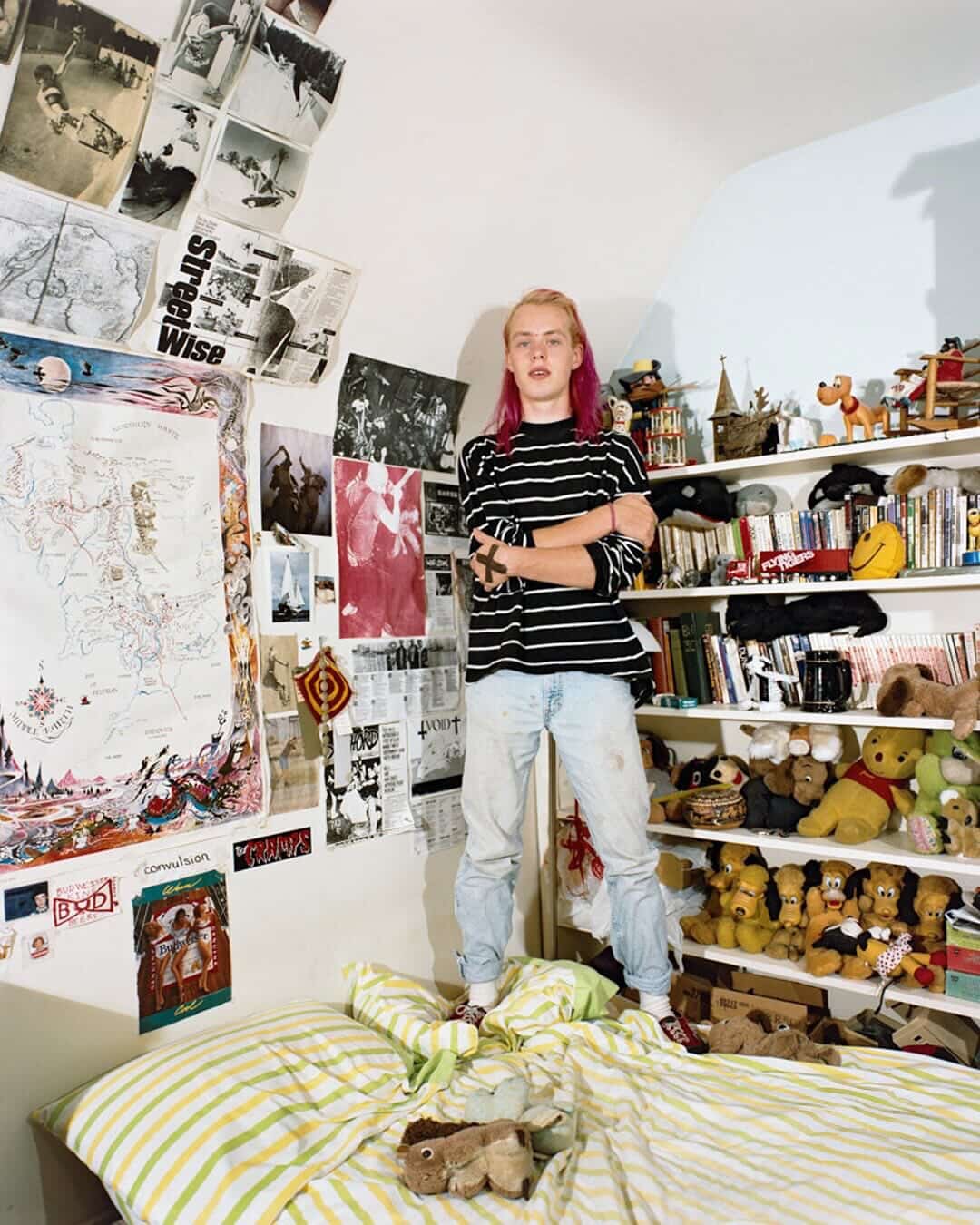
A girl sits on the edge of her bed, hands propped behind her back. Around her, a plaid blanket, illustrated sheets, wooden furniture, and small objects left in no apparent order coexist. Nothing seems staged. Yet, every detail speaks. In Adrienne Salinger’s photographs, the bedroom isn’t just a background. It is an extension of the body—a self-portrait composed before anyone had even learned to use that word. Posters, records, clothes, and photographs tell stories of desires, belongings, and contradictions with a precision that no pose could ever replace.


Follow us on Instagram
@youthmagazine



#youthculture
Photographing a Community Without Turning It Into a Symbol: Joseph Rodriguez’s 1980s
The core of Joseph Rodriguez’s work resides in the imperceptible distance between the photographer and his subjects. Born and raised in Brooklyn, and trained at the School of Visual Arts and the International Center of Photography's photojournalism program, Rodriguez dedicated a crucial portion of his practice to Spanish Harlem—also known as East Harlem or El Barrio. From the mid-to-late 1980s, he spent several years photographing the neighborhood, creating one of his most extensive and personal bodies of work.
Against the Baggy Clothes, Thrashed Shoes, and Open Plazas: The Identity of 90s Skate Culture
An oversized green T-shirt, a hat pulled low over the eyes, a middle finger almost pressed against the lens. In another image, five kids occupy a sidewalk without doing anything spectacular: waiting, talking, boards resting under their feet. It is precisely this apparent lack of posing that makes nineties skateboarding so recognizable. Before the tricks, there was a way of existing in the world.
In a Culture Obsessed with the Answer, Listening has Become a Countercultural ActWe live inside ever-faster conversations.
We talk, we comment, we react—often before we’ve truly understood what the
In this continuous flow, listening has become a rarity. It isn't because we lack words, but because we lack the space necessary for them to fully land. To listen means to momentarily suspend your own version of the facts, to renounce the immediate response, and to accept that a conversation doesn’t necessarily have to produce a conclusion, a solution, or a stance.
It isn't the same as silence. It isn't politely waiting for your turn to speak. It is an active form of presence that requires attention, openness, and the ability not to immediately turn someone else's experience into a comparison with your own.
Posters, Clothes, and Clutter: The Emotional Archive of a Pre-Social Media Generation
A girl sits on the edge of her bed, hands propped behind her back. Around her, a plaid blanket, illustrated sheets, wooden furniture, and small objects left in no apparent order coexist. Nothing seems staged. Yet, every detail speaks. In Adrienne Salinger’s photographs, the bedroom isn’t just a background. It is an extension of the body—a self-portrait composed before anyone had even learned to use that word. Posters, records, clothes, and photographs tell stories of desires, belongings, and contradictions with a precision that no pose could ever
replace.

Don't Miss a Thing
Join our circle to receive monthly essays, care guides for vintage media, and early alerts for our secret collection drops.